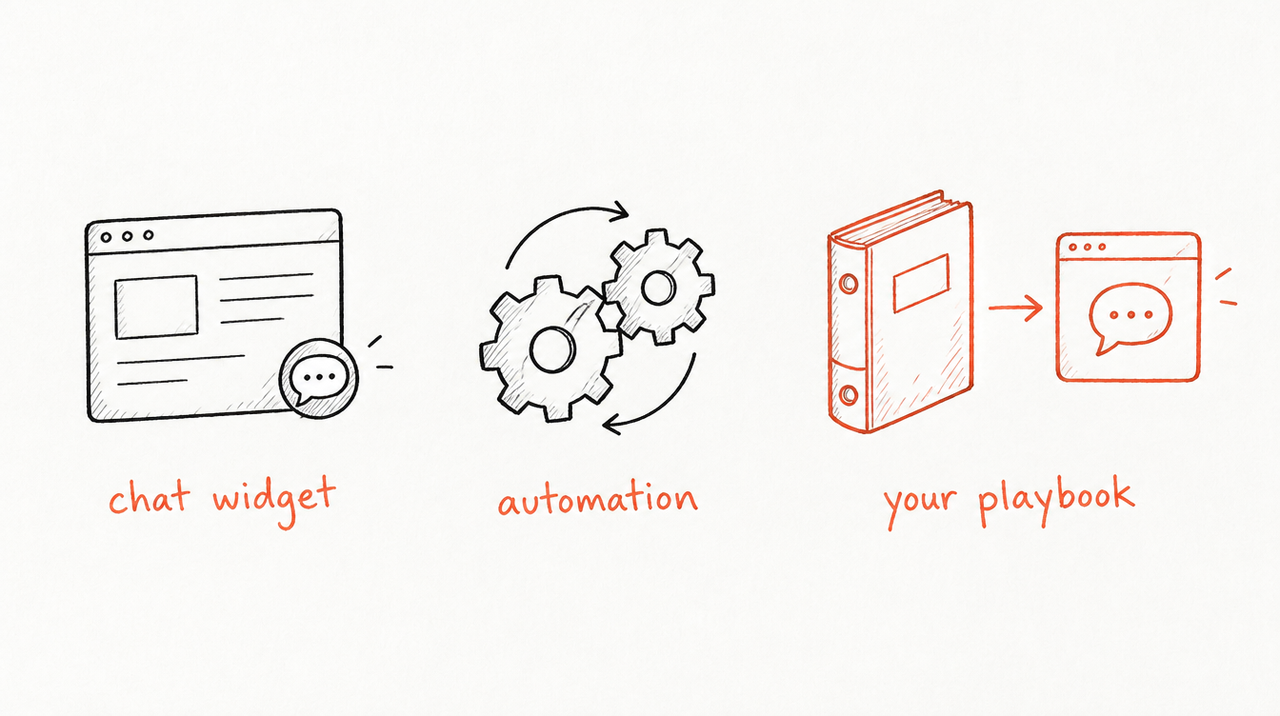
Sell the AI that matches who will use it. If your client's customers need questions answered and calls booked, sell a chat widget or AI receptionist; if your client's team needs repetitive work done, sell an automation agent; and if your client pays you for judgment and already asks ChatGPT between your calls, put your agency's playbook inside their own ChatGPT or Claude.
Ask ChatGPT what AI your agency should offer and it asks you two things back: "How do you want to deliver?" and "Where should clients use their AI?" Here are both answers, with an example client, the upkeep, the pricing and one honest limitation for each option.
Why are agencies adding an AI offer at all?
Because clients already use AI and bring it to the meeting. Owners describe the same problems:
- "AI does it for free." A client told one owner "ai does the same thing for free now."
- Second-guessing through ChatGPT. "i'm debating a chatbot that already told them they were right."
- A bot per client. More clients means more software to keep running.
Each offer below solves different ones of these. None solves all of them.
Option 1: a chat widget or AI receptionist on the client's website
A chatbot on the client's site, or a voice line that answers their phone. Most "white-label AI" (a product someone else built that you resell under your own brand) is this kind.
Example: say you run lead generation for a dental clinic. Calls after 6pm go to voicemail and many callers never ring back. A receptionist answers and books the cleaning.
- Who uses it: the client's customers, not the client.
- What it does: answers questions, qualifies leads, books calls.
- What you maintain: one bot per client, each with its own prices, hours and hand-off rules. When the clinic changes prices, you update that bot.
- How you charge: usually a monthly fee per client with a markup on the platform and usage cost.
- What it does for the retainer: something the client can count: calls answered, appointments booked.
- Limitation: it serves the client's customers, so it doesn't help when the client questions your strategy. And your competitors can resell the same platform.
Platforms built for this, as of October 2026:
- GoHighLevel: SaaS Mode, for reselling HighLevel as your own software, comes with Agency Pro at $497 a month. Conversation AI and Voice AI carry usage-based charges, and its AI add-on plans are billed per sub-account, meaning per client (pricing).
- Stammer.ai: white-label chat and voice agents. Removing Stammer's branding and using your own domain needs the Pro White Label plan at $99 a month (pricing).
- Voiceflow: an Agencies & Partners plan with white-labeling, client hand-off tools and usage-based billing; the page shows no fixed price (pricing).
Option 2: an automation agent that does tasks
An "agent" here means a workflow that runs steps on its own: it pulls data from one app, lets an AI model decide or write something, and pushes the result into another.
Example: say you run operations for an online store. Every wholesale inquiry gets researched, scored and dropped into the CRM with a draft reply before anyone opens their inbox.
- Who uses it: nobody directly; it works in the background for the client's team.
- What it does: moves data, drafts emails, updates records.
- What you maintain: every workflow and every app it connects to. When an app changes, the workflow breaks and you fix it. One owner called the job "integration janitor."
- How you charge: usually a setup fee per workflow, then monthly maintenance.
- What it does for the retainer: once it runs part of the client's day, it's hard to cancel.
- Limitation: the work grows with every client and workflow. It does tasks; it doesn't answer "should we cut spend?" And anything that changes campaigns or records needs careful limits.
Agencies build these with tools like n8n, Relevance AI, Zapier and Make. As of October 2026, n8n bills cloud plans by executions (one execution is one run of a whole workflow, however many steps), and a self-hosted version is on GitHub (n8n pricing). Relevance AI lists one Enterprise plan, priced through sales (Relevance AI pricing).
Option 3: your playbook inside the client's own ChatGPT or Claude
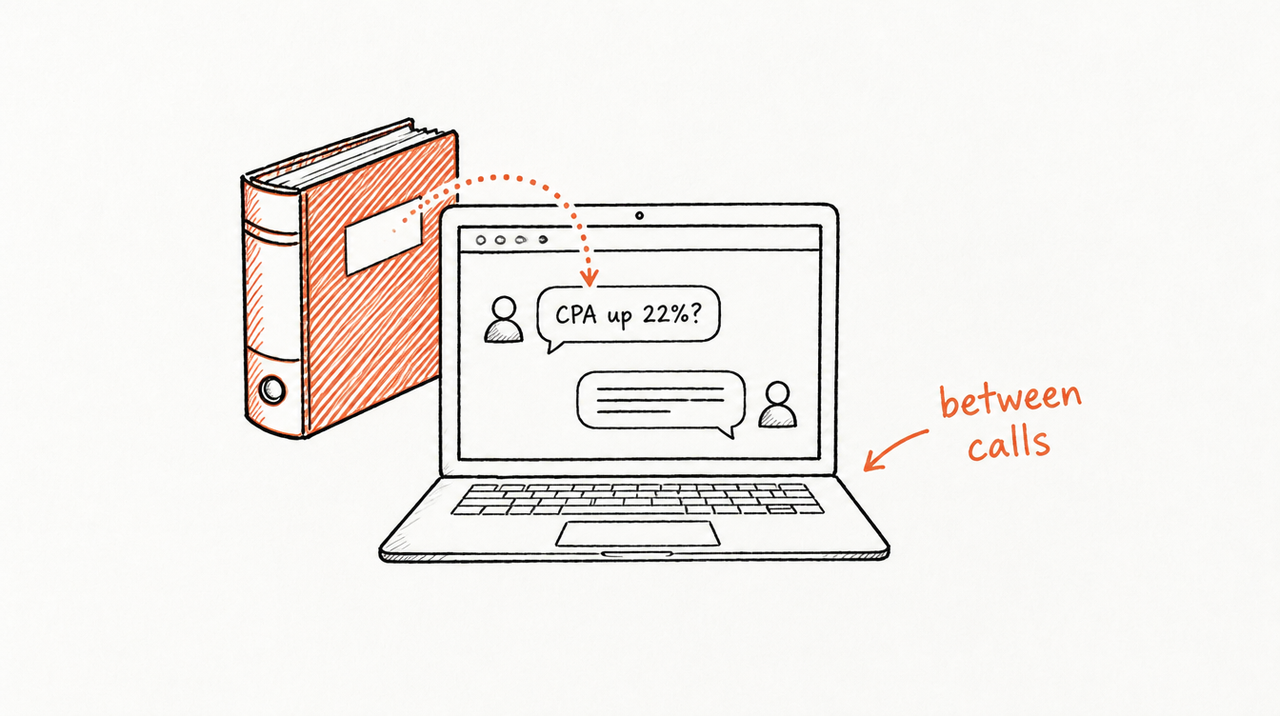
Here the AI is for the client. You turn one review your team already does, such as "is this CPA rise a problem?", into a tool your client uses inside the ChatGPT or Claude account they already have. It answers the way your agency would, from their own numbers.
Example: say you run paid media for a software company. Between weekly calls the client asks ChatGPT: "CPA is up 22% this week, should we cut spend?" On its own, ChatGPT gives a general answer that may contradict yours. With your playbook connected, it checks what your team would: the offer changed four days ago, and this account usually takes six to eight days for conversions to come in. So it answers: too early to cut, recheck after the conversion window, and here is the number still missing.
- Who uses it: the client and their team.
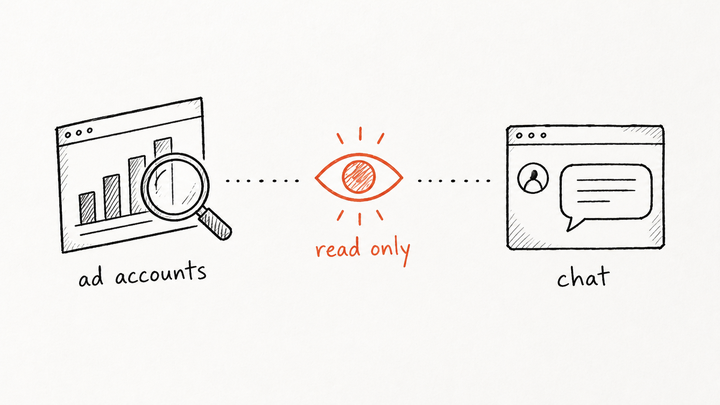
- What it does: answers with your agency's checks and thresholds, reading the client's own ad accounts, Google Analytics 4, Shopify and HubSpot read-only. It never changes a campaign, budget or record.
- What you maintain: one playbook for every client. Improve a review once and every client gets the new version on their next question.
- How you charge: you'd usually include it in the retainer or a higher tier. With ExpertRelay it costs you $99 a month for the agency plan plus $49 for each client you turn it on for, with no setup fee and the first 14 days free (a card is needed to start).
- What it does for the retainer: the AI your client trusts gives your answer, under your agency's name, instead of arguing with you.
- Limitation: clients need Claude, Cursor, or ChatGPT Plus or Pro (free ChatGPT accounts can't add it yet); there's a web page for anyone whose app can't. It doesn't answer the client's customers or run tasks. Useful answers reveal parts of how you think: the files stay private, but a client could piece some of it together from answers.
Inside the client's ChatGPT, or in a portal branded as my agency?
A branded portal gives you full control of the look, but it's one more login, and clients who already ask ChatGPT will keep asking ChatGPT.
You keep your brand inside their ChatGPT too. With ExpertRelay, once you verify a domain such as ai.youragency.com, client invite pages and connections use it. Each client gets their own access, with up to 300 reviews a month, and you can set a lower cap per client. Client setup takes about two minutes.
If a client doesn't use ChatGPT or Claude at all, a portal may suit them better.
How to choose: which AI offer fits your agency?
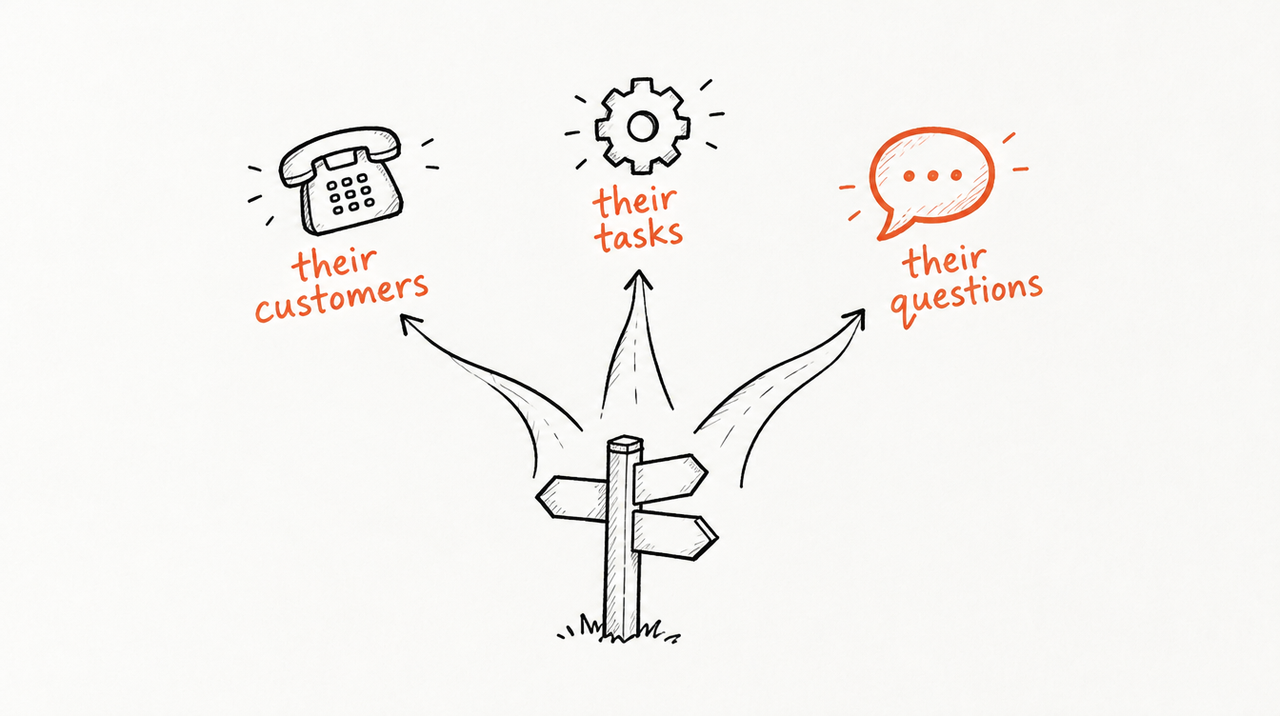
- Local-business lead generation (dentists, trades, real estate): a chat widget or AI receptionist. The problem is missed calls, and bookings are easy to count.
- Ops-heavy clients (ecommerce, B2B sales teams): an automation agent, if you're ready to maintain it like software.
- Paid media, SEO and strategy retainers where clients ask ChatGPT anyway: your playbook inside their ChatGPT or Claude. They pay you for judgment, and right now a general chatbot is supplying it.
Many agencies may end up doing more than one. A paid media agency could give every client its playbook in their ChatGPT and still sell a receptionist to the one client that runs a clinic. Pick by which offer makes what you're known for more valuable. On the reselling side, see White-label AI for agencies.
When you don't need ExpertRelay
- Your clients need their phones answered or leads booked. That's a widget or receptionist; ExpertRelay doesn't do it.
- You want AI that changes campaigns or records. That's an automation; ExpertRelay only reads.
- One or two clients ask. A checklist they paste into their own ChatGPT is free. You can't update it or take it back, but for a short checklist that may not matter.
ExpertRelay is worth $49 a client (on top of its $99 agency plan) when several clients ask the same kinds of questions, you want one playbook you update once, and you want access to end when a client leaves: remove one and it stops answering and reading their accounts at once, and their seat comes off your bill.
See how ExpertRelay works for agencies, and try it free for 14 days →
FAQ
Should my agency sell AI agents to clients?
If clients need background work done, such as leads researched or reports built, yes, if you're ready to maintain each workflow. If they pay you for advice, your playbook inside their ChatGPT or Claude usually fits better.
What's the difference between an AI agent and an AI chatbot for clients?
A chatbot or receptionist talks to the client's customers. An automation agent does tasks for the client's team without anyone chatting to it. A playbook inside the client's ChatGPT answers the client themselves.
Can I put my agency's AI inside my client's ChatGPT?
Yes. With ExpertRelay, the client connects your playbook to their own ChatGPT (Plus or Pro), Claude or Cursor in about two minutes, and it answers under your agency's name. They use it without ever receiving your files.
How do agencies charge for AI services?
Usually a monthly fee per client with a markup (widgets, receptionists), a setup fee plus maintenance (automations), or inside the retainer or a higher tier (a playbook clients ask). ExpertRelay costs you $99 a month for the agency plan plus $49 per client you turn it on for.
What happens to the AI when a client leaves the agency?
With ExpertRelay, removing a client ends their access at once and takes their seat off your bill. They keep their own chats; they never received your files.